The Room
Tunica County, Mississippi

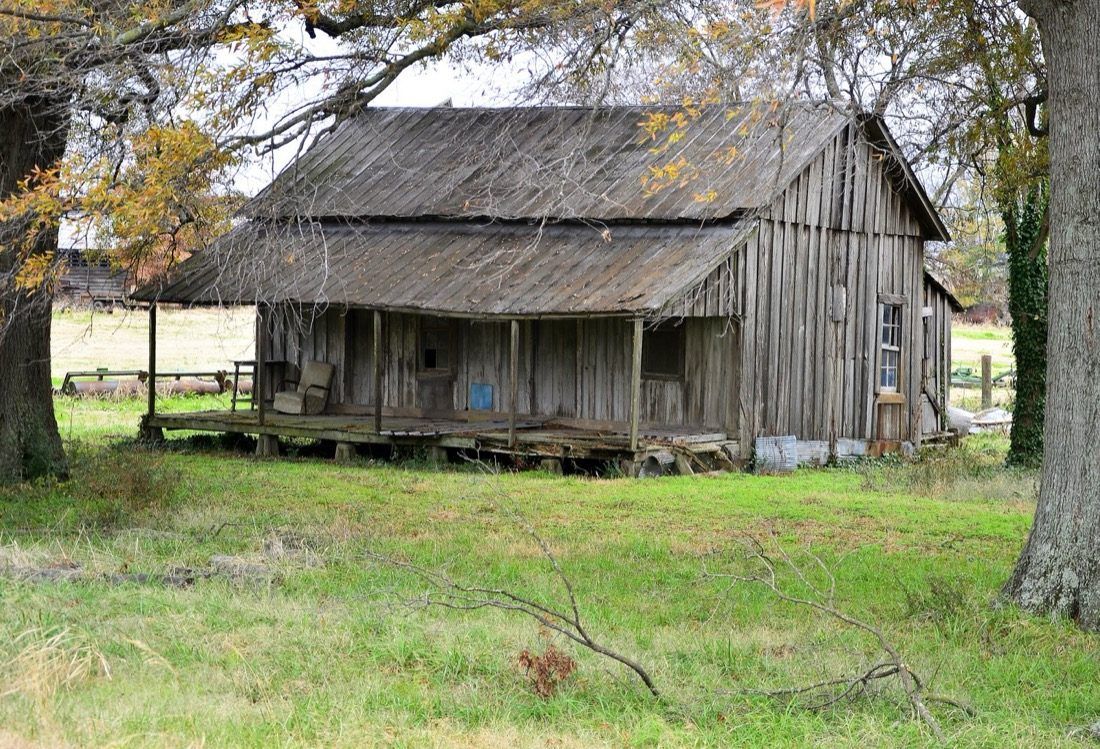
Tunica County built an economy out of rooms. Gaming floors, hotel towers, buffet halls, back-of-house corridors where 13,000 people used to clock in and out. Four casinos have closed since 2014. A hotel complex with more than a thousand bedrooms has stood empty the whole time. The county records very high county distress, 16th of 3,144 in July 2026, with 9,234 people left to fill what remains.
The 1,356 Empty Rooms
The Harrah’s Tunica complex has 1,356 hotel rooms in it. They have been empty since June 2, 2014, the day the casino closed and eliminated roughly a thousand jobs at the largest casino floor between New Jersey and Las Vegas. In 2024, a proposal emerged to convert the complex into housing for migrant youth in federal custody. Tunica County officials rejected it. The building is still there. The rooms are still empty. “We’ve got too many abandoned casinos down here already,” Eric Marable told FOX13 Memphis when the next one announced.
The next one was Sam’s Town Hotel and Gambling Hall. Boyd Gaming said in September 2025 that it would close Sam’s Town permanently on November 9, after 31 years of operation, citing two decades of declining demand in the northwest Mississippi market. “When Harrah’s closed down, did nothing ever come there either,” Bennie Williams told the same reporter. Pattern recognition, stated flat. Williams had watched it happen four times in eleven years. The closure was the fourth in Tunica since 2014, after Harrah’s, The Roadhouse, and Resorts Casino. It put 175 to 200 more people out of work and left five casinos where there had once been ten. The 9,234 residents of Tunica County live among a set of enormous buildings that used to employ them.
The Score Inside the Buildings
The July 2026 County Distress Index scores Tunica at 89.92 — very high county distress, rank 16 of 3,144 counties nationally and rank 7 of 82 in Mississippi. The distress is not distributed across one or two domains. Delinquency, Debt Burden, and Default & Legal all sit at the top of their range: debt in collections, auto loan delinquency, credit card delinquency, and subprime credit share all at the 95th percentile nationally; renters carrying 50%+ cost burdens at the 95th percentile (the county’s homeownership rate is 39.5%; six out of ten households rent); and the court filing rate at the 95th percentile, with more recorded Chapter 13 filings than Chapter 7 filings. Even the softer domains run high: Safety Net & Buffer at 74.91, Labor at 89.68.
The shape of that profile matters. The number carrying Tunica’s score is the pressure on households that are inside paid work — buffet cooks, warehouse labor, retail, the five casinos still open — who have taken on debt the remaining gaming-tax economy can no longer service. A 27.6% poverty rate in 2023 is the floor under the county. What lifts Tunica this high in the national ranking is what sits on top of it — the people who stayed running out of runway on the credit they used to think the casinos had made possible.
Sugar Ditch to Gaming Floor
The modern form of Tunica County was built out of a national humiliation. In 1985, CBS’s 60 Minutes sent Morley Safer to Sugar Ditch Alley — a neighborhood named for the open sewer running between collapsing shacks where more than forty Black families lived without indoor plumbing. Safer compared what he saw to South African townships. Jesse Jackson visited and called Tunica “America’s Ethiopia.” The county’s poverty rate that year was 56 percent. It was statistically the second-poorest county in the United States.
Mississippi legalized dockside gambling in 1990. Tunica had nine casinos by the mid-1990s and ten by 2006. Casino employment peaked at approximately 13,000 in 2001 in a county that then had fewer than 10,000 residents; commuters drove in from DeSoto, Coahoma, and across the Mississippi River from Arkansas. Casino revenue peaked in 2006 at almost $1.2 billion, the paper reporting in the Harrah’s obituary that “increased competition and a recession that drained patrons’ pocketbooks began to bite.” Gambling tax revenue paid for the roads, the schools, the hospital campus. Sugar Ditch was bulldozed and paved over with concrete. The national poverty story stopped running. The structural numbers didn’t move the way the story did.
Then came the unwinding. Arkansas legalized competing casinos. The 2008 recession drained the patrons Las Vegas Sun had described. Online gambling took the under-50 market. Harrah’s closed June 2, 2014. Resorts Casino and The Roadhouse both closed in 2019. Sam’s Town closed November 9, 2025. North Mississippi gaming revenue for January through May 2025 ran just over $222 million — roughly one-third of the Gulf Coast casino market’s $659 million over the same period. Tunica’s one significant attempt to diversify beyond gaming, GreenTech Automotive, received six million dollars in state and county incentive financing on a promise of 350 jobs and a $60 million investment. The company produced at most 94 jobs. The Mississippi state auditor said in July 2017 that the project “appears to have been a game of smoke and mirrors, and a corporate entity that never had any intention to deliver on the promises it made.” GreenTech filed for bankruptcy in February 2018. The final 2020 settlement came in at $575,000 on a six-million-dollar public commitment.
A County Made of Interiors
A casino economy is an economy of interior space. Gaming floors. Hotel towers. Buffet halls. Back-of-house corridors. The accounting department. The valet booth. The cashier cage. When the business is open, thousands of people move through those spaces daily and each one has a kind of economic fact to it — generating revenue, employing the people who maintain it, supporting a tax base that builds the roads and the schools and the hospital that serve the county around it. When the business closes, the buildings stay. They do not become something else. They are zoned for gaming, oriented toward a highway exit off U.S. 61, cut off from the rest of the county by their own parking lots. A 136,000-square-foot casino floor has no secondary use. A 1,356-room hotel tower does not convert into anything Tunica’s 9,234 residents can afford to live in, staff, or heat.
This is what the workforce stratification of a casino economy produces when it contracts. The dealers, housekeepers, buffet cooks, and valets — the people who spent their working lives inside — are the ones left holding the mortgages and auto loans they took on during the boom. The management imported from Las Vegas and Atlantic City goes home. The corporate balance sheets get rewritten in other cities. Sabrina Johnson, a sixteen-year cook at Harrah’s, told the Las Vegas Sun in June 2014 the week the casino closed: “I’ve still got to have some kind of income coming in.” Eleven years later, the sentence could have been delivered by one of the 175 to 200 Sam’s Town workers who clocked out for the last time on November 9, 2025. The income did not come back. The casino did not reopen.
The rooms that mattered outside the casinos got pulled into the same equation. On February 5, 2026, the Robert C. Irwin Public Library in downtown Tunica burned to the ground. Thirty firefighters spent five and a half hours on it. It had operated for over fifty years and was the largest structure ever lost to fire in Tunica city limits. “It was just devastating,” Antonio Nunn, a resident watching it burn, told Action News 5. The library had held the county’s public computer terminals — the terminals a resident without home internet used to apply for a job, renew Medicaid, file an unemployment claim, fill out a child’s school form. The nearest remaining branch is 13 miles north in Robinsonville. The fire was ruled accidental. The library will remain closed indefinitely. The county now has 1,356 empty hotel rooms at one end of U.S. 61 and one fewer public room at the other.
The Counterforce, Running Behind
Not everything in the Tunica data points toward pure collapse, and the concept only holds up if the counterforce is named honestly. Safety Net & Buffer here scores 74.91 in July 2026 — high, but the softest of Tunica’s five domains — and the poverty rate is a real number. The poverty rate moved from 56 percent in 1985 to 27.6 percent in the 2023 SAIPE estimate. Child poverty is 41.5 percent, which is devastating. The casino decades delivered real things. They built a Tunica County Healthcare Authority network. They funded roads and schools the federal government was not going to fund. The Gateway to the Blues Museum opened on U.S. 61 in February 2015, a post-peak attempt to build something durable from the county’s actual cultural heritage rather than from borrowed gaming revenue — a different kind of room, run differently.
What the CDI score is measuring, then, is a different condition than 1985 — the pressure landing on the households who stayed through the decades of the boom and are now watching the economic instrument that partially raised them contract faster than anything can replace it. A renter at the 95th percentile for cost burden in July 2026 is not an unemployed sharecropper. She is a paid worker carrying a rent obligation that takes half or more of a post-casino-era paycheck. The county’s bankruptcy filing rate is also at the 95th percentile, and its recorded chapter mix is Chapter 13-dominant; those aggregate counts do not establish filers’ home equity, income, motives, eligibility, or plan feasibility. Mississippi’s non-judicial foreclosure process can move from acceleration to sale in as little as 30 days. The state has not expanded Medicaid; 31.3 percent of Tunica residents are on Medicaid and as of early 2026, the 2024 and 2025 Medicaid expansion bills had both failed in committee, with no successor filed. The 2025 state income-tax phase-out reduces the state’s fiscal capacity to backstop rural hospitals, the remaining library branch, or any of the public rooms the county would need to replace what it is losing. The counterforce is real. It is running behind the pressure.
Which Rooms Are Filled
The question Tunica County keeps answering is which rooms are filled, which are empty, which are being rented at the 95th percentile of cost burden, and which have just burned down. A 1,356-bedroom hotel complex sits empty at one end of U.S. 61. A public library sits as rubble at the other. Five casino floors still run; five are closed, their square footage pulled out of the county’s economic base without anything arriving behind them. The ten casinos of 2006 employed about 12,000 people in a county of 9,234. The five casinos of 2026 employ roughly 4,000. The math on a gaming-tax-funded public sector does not work at that ratio and has not worked at it for a decade.
Watch the Delinquency numbers — three credit indicators at the 95th percentile in July 2026. Watch the Debt Burden numbers — the renters at 50%+ burden at the 95th percentile are one rent increase from collections. Watch the remaining five casino floors. James Cotton was born on the Bonnie Blue plantation in this county on July 1, 1935, when Tunica was statistically one of the poorest counties in the United States. He picked up a harmonica and left. He won a Grammy sixty-one years later. The rooms he was born in are still here. The county that made him now has too many rooms and not enough of its own people to fill them.