The Patron
Duval County, Texas

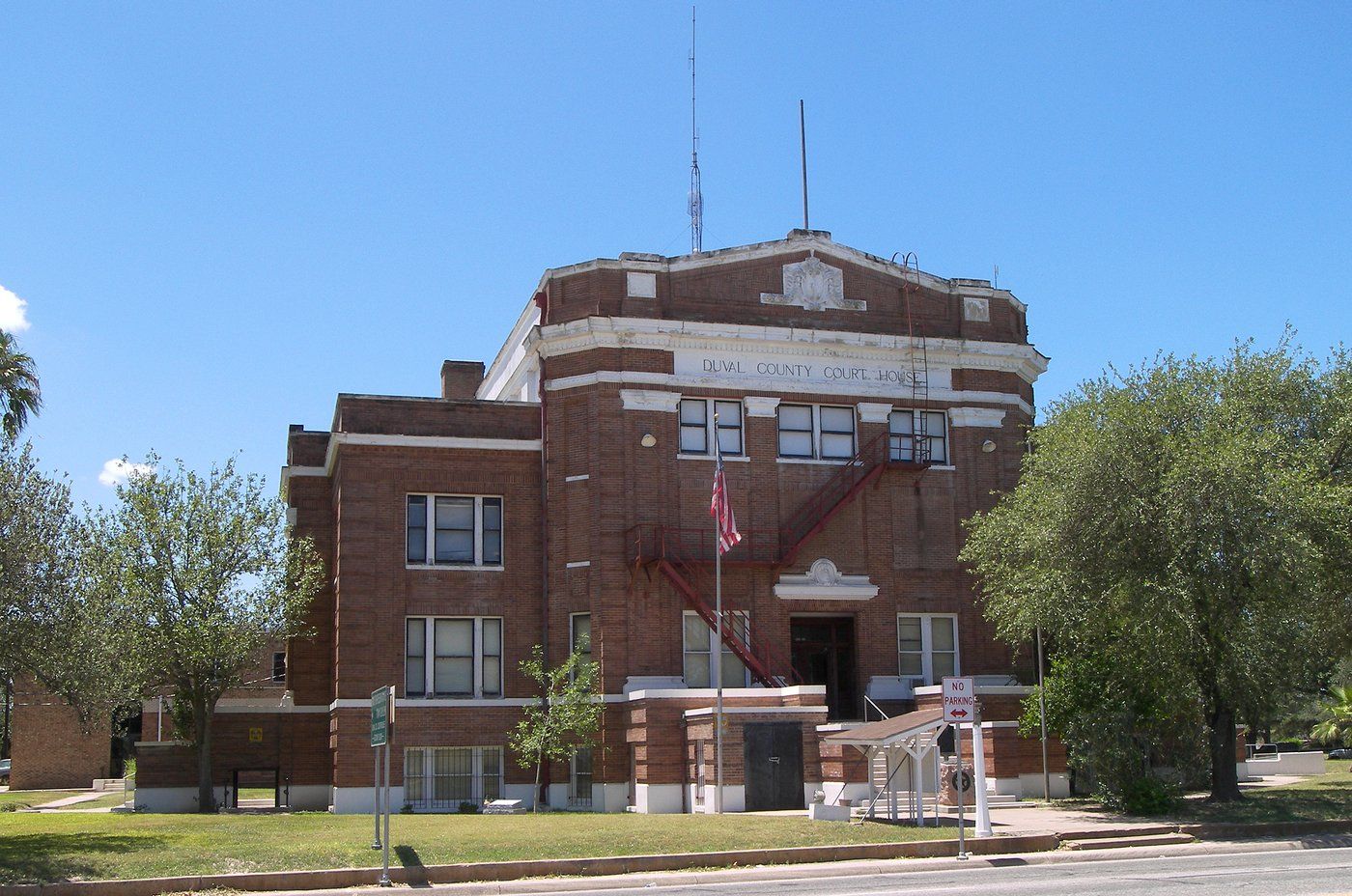
George Parr ran Duval County for thirty-three years. They called him El Patron. He's been dead since 1975. The poverty he managed is still here, managed now by a different patron.
The 87 votes that changed American history
In 1948, six days after the polls closed in the Texas Democratic Senate primary, 202 new votes appeared in Jim Wells County. Two hundred for Lyndon Johnson. Two for Coke Stevenson. The names were in alphabetical order, written in the same ink, by the same hand. Johnson won the primary by 87 votes out of 988,295.
George Parr ordered it. He was the son of Archie Parr, who’d built the machine in the early 1900s, and he ran it the way his father had — speaking Spanish, learning the names of constituents’ children, paying their bills from the county treasury. They called him El Patron. The Duke of Duval. He ran it like Robin Hood ran Sherwood Forest, if Robin Hood also rigged the ballot box.
Without those 87 votes, no Senator Johnson. No Vice President Johnson. No President Johnson. No Civil Rights Act of 1964. Luis Salas, the election judge who certified the count, confessed in 1977: “Johnson did not win the election. It was stolen for him.”
Robert Caro spent years in South Texas documenting those 87 votes for Means of Ascent, the second volume of his LBJ biography. The most meticulously documented case of electoral fraud in American history, from the county seat of San Diego, Texas. Population then: about 20,000. Population now: 9,604 in July 2026. No doctor’s office, no hotel, no public transportation. A Dairy Queen town, as Trey Contreras at the county historical museum puts it.
The county that changed American history couldn’t keep a doctor’s office.
Three patrons, one poverty
Duval County has never had an independent economy. It has had patrons.
The first was oil. Production hit 20 million barrels in 1938 — third in Texas. LIFE magazine sent a photographer to Freer, the county’s second town, and ran the headline “Biggest of Oil’s New Boom Towns Squats in the Muds of Texas.” The town had no potable water, no sewage system, and no bank, despite a $500,000 monthly payroll. Enormous wealth moving through and leaving nothing permanent behind.
The second patron was the machine. George Parr took over from his father in 1942 and ran Duval County for thirty-three years. The patronage system was corrupt. It was also the only social safety net most residents had. When Parr shot himself at his ranch in 1975 — a fugitive from a federal tax evasion conviction — no public institution replaced what he provided.
The third patron arrived quietly. It doesn’t have a name. It sends checks.
Today, 45.8% of personal income in Duval County comes from government transfers in 2024. Social Security, disability, SNAP, Medicaid. Only 31.5% comes from wages and salaries. One in three tax filers qualifies for the Earned Income Tax Credit. The federal government is now doing — impersonally, through direct deposit — what El Patron once did in cash from the county treasury.
The poverty rate is 29.1% in 2023. For children, 42.8%. Nearly one in two kids growing up below the poverty line. Median household income sits at $40,415 — 67 cents on the Texas dollar.
The oil thinned out. By 1988, production had dropped to 3 million barrels — 53rd in the state, down from 3rd. The machine collapsed. The population halved from 20,565 in 1940 to 9,604 today. The poverty stayed through all three patrons.
Only the patron changed.
The housing anomaly
Something unusual happens in the housing data. In a county this poor, you’d expect housing to crush people. It doesn’t.
Only 2.2% of renters are severely burdened in 2023 — one-eighth the national county median of 17.8%. That severe-burden share sits at the 5th percentile of U.S. counties in July 2026. A poverty rate above 29% alongside severe rent burden at the 5th percentile is unusual in the same county.
The explanation is ownership. 71% of Duval County households own their homes in 2023. Median home value: $89,400. These aren’t markers of wealth. They’re markers of inherited property in a place where the land has almost no market value. You own the house because your grandmother owned it. You can’t sell it because there’s no buyer. The housing stock outlasted the people it was built for.
The patron — whether oil money or machine patronage — never built a housing market. It left behind houses.
And here is the catch. The rent-to-income ratio is at the 95th percentile in July 2026. Rents are cheap in absolute terms — $1,015 a month for a two-bedroom in fiscal year 2026. But for a household earning $40,415, that puts them right at the 30% threshold. Housing is affordable in the way a $5 hamburger is affordable when you have $15 in your account.
Half the county in collections, two in bankruptcy
Half the county has debt in collections. 49.7% in the Urban Institute’s 2025 data. Medical debt runs 13.5% — more than three times the national median of 4.2%. Credit card delinquency is 12.1%, more than double the national county median of 5.5%. 46.9% of the population has subprime credit — nearly half the county locked out of mainstream lending.
And yet. Two bankruptcy filings in the entire county in 2025. Two. Both Chapter 13. The filing rate is 20.8 per 100,000 residents, against a national median of 129.4. The debt-in-collections and bankruptcy series describe different records; their difference does not establish whether residents sought, needed, or could access a legal remedy.
The aggregate sources do not explain the gap. They contain no linked information about local attorneys, awareness, filing costs, household assets, collection activity, or a resident’s reason for filing or not filing. Those possibilities require evidence outside these indicators.
The patron doesn’t provide attorneys.
Seventy years of life expectancy
Life expectancy in Duval County is 70.3 years. The national average is about 78.9. That gap is 8.6 years.
One mental health provider serves the entire county of 9,604 people. The nearest hospital is about 30 miles away, in Alice. The uninsured rate is 22% in 2023 — and that number carries weight in a state that has refused to expand Medicaid. Hundreds of thousands of Texas adults fall into the coverage gap, and nearly three-quarters of them are people of color. In a county that the American Community Survey puts at 81.6% Hispanic, the Medicaid gap is not an abstraction.
The disability rate is 22.7% in 2023. Obesity runs 42.2%. Depression prevalence: 20%. No leisure physical activity: 40.2%. These numbers describe bodies in a place where the nearest doctor’s office requires a car and a 30-mile drive.
Former Mayor Alfredo Cardenas put it simply: “There are very few jobs and that’s the problem. That’s why the population basically doesn’t grow.”
Pan de campo, without a patron
Sixty-nine new business applications in 2024. The post-COVID entrepreneurial boom never arrived here. The brief 2022 uptick to 73 applications — likely oil-related, a flicker from the Eagle Ford Shale — fell to 50 the next year. 196 business establishments serve 9,604 people.
Average weekly pay is $783 in 2024, 21% below the national median. Wage growth last year was 6.8%, which reads as a positive sign until you calculate what 6.8% of $783 is. Fifty-three dollars.
Pan de campo — thick flour bread cooked over mesquite coals — was designated the official state bread of Texas in 2005. It’s a Tejano ranch tradition born in places like Duval County. San Diego holds an annual cook-off with a parade and Tejano music. The food culture predates every patron. The Parrs didn’t bring it. The oil companies didn’t fund it. The federal government doesn’t subsidize it. It was made here, by the people who stayed, without a patron’s permission.
Graciela Gonzales, a San Diego resident, on the young people: “Their jobs, their lives, their children’s futures are elsewhere.”
The shape of a place run on patrons
Duval County was the most Democratic county in America in 1964, 1968, and 1972. George Parr’s machine delivered margins above 85%. In 2024, Trump won it by ten points — the first Republican to carry Duval since Theodore Roosevelt in 1904. The machine patron is gone. The party loyalty went with it. The poverty didn’t go anywhere. Duval County scores 73.53 on the County Distress Index in July 2026. High county distress. Three hundred sixtieth of 3,144 counties nationally. Thirty-fourth in Texas. Its Safety Net & Buffer domain ranks 5th of 3,144 — poverty, child poverty, median household income, and the uninsured rate all at the 95th percentile, disability at the 92nd. Its Delinquency domain ranks 160th. But the Default & Legal domain splits in two: debt in collections at the 95th percentile, the court filing rate at the 5th. The two inputs point in different directions and do not explain why. Transfer income constitutes 45.8% of the economy in 2024, and the Medicaid gap leaves 22% of the county uninsured in 2023. An economy resting on checks from a patron that doesn’t build anything permanent is the same arrangement Duval has lived under for a century. The county that produced 87 votes and changed American history is still waiting for a patron who builds something that stays after the patron leaves. In over a century, it hasn’t found one.