The Yield
Mitchell County, Georgia

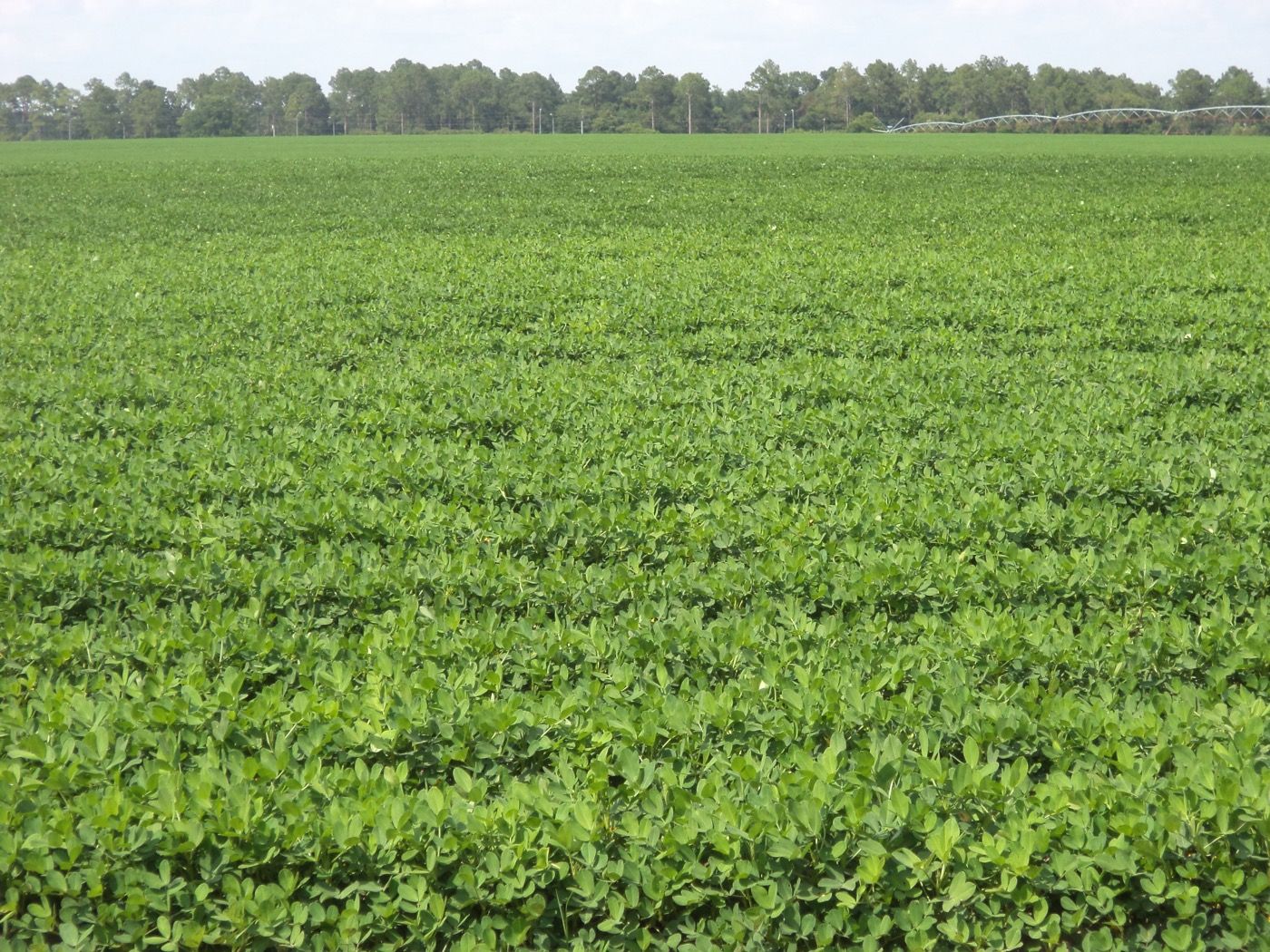
The top peanut county in Georgia produces $370 million in annual farm output as of 2019. Forty-two percent of its residents have debt in collections in 2025 Urban Institute data. The yield leaves. The cost stays.
Where the county’s money goes
On December 26, 2024, a boiler exploded at the Tyson Foods poultry plant in Camilla, Georgia. A hose filled with oil ruptured, igniting the mist. One person died. Two workers were seriously burned. The Occupational Safety and Health Administration investigated and fined the company $16,550.
The plant employs 2,570 people in a county of 21,114. It processes over ten million pounds of poultry monthly. The union president, Stuart Appelbaum, called the fine “barely a drop in the bucket” for a multibillion-dollar corporation. Sixteen thousand five hundred fifty dollars. That is what the federal government assigned to what happened inside that building.
Mitchell County is also the top peanut-producing county in Georgia. 45,634 acres planted. 173 million pounds harvested. Three hundred sixty-seven farms cover most of the county, with farm gate value exceeding $370 million as of 2019. Add the chicken plant, and this county produces enormous volumes of food for the national market. The yield is real. So is the question of who benefits from it.
Full employment, crisis-level debt
Most distressed counties I’ve profiled have high unemployment as the obvious driver. Mitchell County doesn’t. Unemployment is 3.8% in May 2026, just above the national county median of 3.7%. People are working. At the plant. At Autry State Prison, which employs 352 people to house 1,698 inmates. At the 25-bed hospital. At the schools. Labor is the least distressed of Mitchell’s five domains by a wide margin — the unemployment percentile sits near the national midpoint. It is the brightest spot in a dark room.
The debt numbers tell the other story. Forty-two percent of residents have debt in collections in 2025 Urban Institute data. Student loan delinquency is 31.3%, nearly double the national median of 16.3%. Auto loan delinquency is 13.0%, more than double the national median of 5.3%. Average weekly wages are $874 in 2024. Median household income is $48,774 in 2023. One in four residents lives below the poverty line. One in three children.
The jobs exist. The wages don’t close the gap. Mitchell County scores 84.54 on the County Distress Index in July 2026 — very high county distress, 55th of 3,144, 7th in Georgia. Its Default & Legal domain ranks 12th in the country, its Delinquency domain 25th. Eleven counties carry a worse Default & Legal load. The debt is the story, not the jobs.
The cost of the work the county runs on
The number underneath the debt is medical. 17.2% of residents carry medical debt in collections in 2025 Urban Institute data — 4.1 times the national median, higher than all but 21 counties in the country.
The county has a hospital. Archbold Mitchell is a 25-bed critical access facility. The nearest full-service hospital, Phoebe Putney Memorial, is about 30 minutes north in Albany. But 18.4% of the county is uninsured in 2023 — more than double the national median of 8.0%. Georgia has not expanded Medicaid, leaving hundreds of thousands of residents in the coverage gap: earning too much for traditional Medicaid, too little for marketplace subsidies.
In March 2020, four workers died of COVID at the Tyson plant. The union described conditions inside: 2,000 people in one facility, “working side by side” with no access to masks. The disability rate is 21.7% in 2023. Nearly 30% of the county is on SNAP.
The massacre on the courthouse square
The Mitchell County courthouse sits on a square shaded by 200-year-old live oaks listed on Georgia’s Register of Landmark and Historic Trees. The courthouse itself is white Georgia marble, built in 1936 with $177,792 in Public Works Administration funds.
On September 19, 1868, several hundred freedmen marched twenty-five miles from Albany to this square. They were coming to a political rally. Georgia’s legislature had just expelled twenty-eight newly elected members because they were Black. Philip Joiner, one of the expelled, led the march. Whites opened fire from storefronts around the square, killing about a dozen and wounding thirty. For two weeks afterward, armed men rode through the countryside, beating and warning freedmen they would be killed if they tried to vote.
The county did not publicly acknowledge what happened until 1998. The historical marker went up in February 2023 — 155 years later, after organizer Marvin Broadwater Sr. sent what he said were 182 emails. “You can’t heal a wound unless it’s cleansed,” Broadwater told WALB News. “Because the scab will keep coming up.”
Mitchell County is roughly evenly split: 45.8% White, 45.0% Black, 5.2% Hispanic. The poverty rate is 16.6% for White residents, 33.3% for Black residents, and 52.5% for Hispanic residents.
Signs pointing the other direction
There are signals pointing the other direction. Business applications in Mitchell County have nearly doubled since 2019 — 298 new applications in 2024, against 155 in 2019. A 195-megawatt solar facility went operational in 2022, covering 1,800 acres with 650,000 panels and a 30-year power purchase agreement with Georgia Power. When Darwood Manufacturing closed in 2018 after 66 years, Fire-Dex bought the facility and brought back 58 jobs making fire protective equipment.
I don’t know whether the business formation numbers represent entrepreneurship or survival — people starting ventures because the opportunity is real, or because $874 a week isn’t enough and they have no other option. The data measures applications, not outcomes. Hurricane Michael destroyed 30 to 40 percent of the pecan trees in 2018. Hurricane Helene caused $6.46 billion in damage to Georgia agriculture in September 2024. A Valentine’s Day tornado in 2000 killed eleven people in Camilla — all eleven in mobile homes. Manufactured housing is still 20.84% of the stock. The county earned a “storm ready” designation afterward. The designation did not replace the mobile homes.
How distress radiates beyond Mitchell
Mitchell sits inside the most distressed corridor in Georgia. Dougherty County — Albany, the regional anchor thirty minutes north — ranks 7th in the nation at 91.78, first in the state in July 2026. Grady County ranks 428th. The whole southwest Georgia block carries moderate-high county distress or worse; the distress appears across the corridor rather than in one county. Mitchell’s bankruptcy filing rate is 3.2 times the national median, and 78.4% of those 2025 filings are Chapter 13. The aggregate court record does not establish whether filers owned homes, sought to retain property, or achieved a repayment outcome. Watch the Default & Legal domain: at rank 12 of 3,144, it records elevated debt-in-collections and filing inputs. Watch the single-employer concentration. Labor is the county’s one bright domain, and it rests on a narrow base — the kind of payroll where a single plant carries the gap between full employment and the dark the other domains already sit in. The yield keeps growing. What stays behind is the question Mitchell County has been answering for 158 years.