Foreclosure Starts vs. Bank Repossessions
Also tracked as The Pipeline
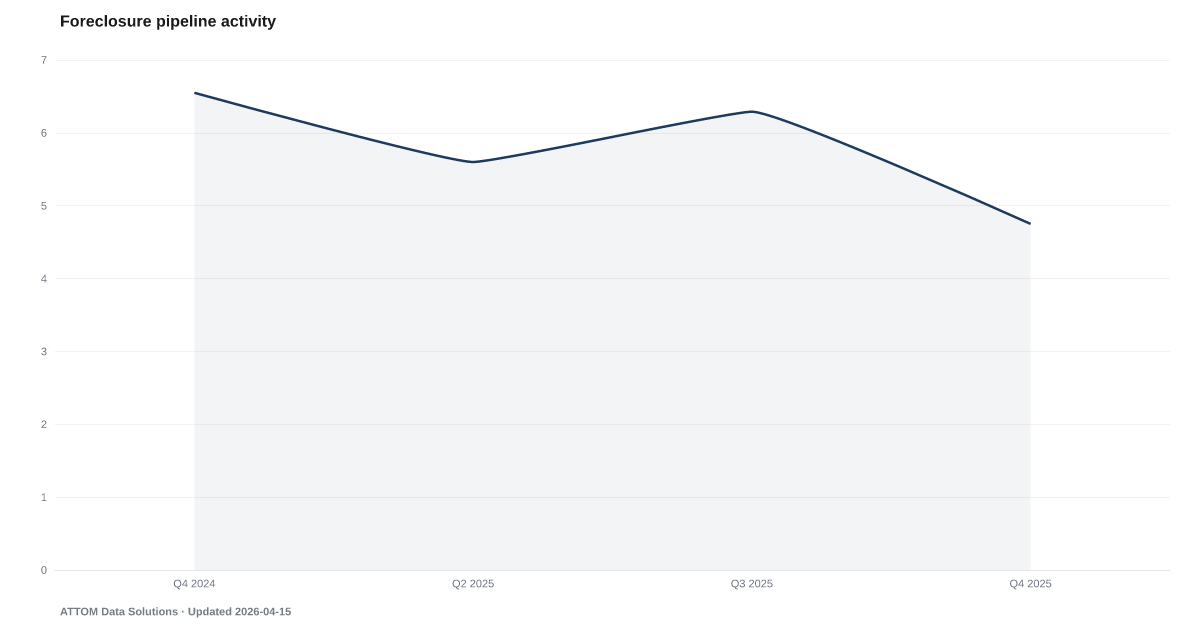
Foreclosure starts for each home a lender took back, by ATTOM's monthly counts
What is the current Foreclosure Starts vs. Bank Repossessions reading?
In August 2026, ATTOM Data Solutions counted 4.5 times as many U.S. properties where lenders started foreclosure as properties lenders repossessed. The two monthly counts cover different properties, so the ratio is not a completion rate and does not measure the number of cases still in process. Source: ATTOM Data Solutions monthly U.S. foreclosure market report; ratio computed by American Default.
In August 2026, ATTOM counted 4.5 times as many properties entering foreclosure as properties lenders took back.
The ratio divides ATTOM's monthly count of U.S. properties where lenders started foreclosure by its count of properties lenders repossessed through a completed foreclosure, known as REO (real estate owned), in the same month. In August 2026 starts were 4.5 times repossessions, down from 5.6 times in July 2026; month-to-month moves in these unadjusted counts can include seasonal swings.
The two counts cover different properties. Homes foreclosed in the second quarter of 2026 had been in the foreclosure process for about a year and a half on average, by ATTOM's figures, so the ratio is not the share of started foreclosures that end in repossession, and it does not measure how many cases are still open. A ratio above one means starts outnumbered repossessions that month; below one, the reverse.
Repossessions are not every completed foreclosure: a property bought by someone else at the foreclosure auction is not an REO. Cases that end in a catch-up, a loan change or a sale never show up as repossessions. ATTOM counts properties, not households or borrowers, and it does not seasonally adjust, meaning its counts keep regular calendar patterns.
American Default Research computes the ratio; ATTOM publishes the two counts. The months stored here have gaps, so this page names no highest or lowest ratio. The foreclosure filings page gives ATTOM's quarterly count of all properties with a filing, compared with a year earlier.
Explore Further
Is this happening to you?
Do you know someone who has lost their home to foreclosure?
Foreclosure Starts vs. Bank Repossessions over time: what has changed?

Counties with the highest default and legal scores
These are default and legal scores from our County Distress Index, not county readings of Foreclosure Starts vs. Bank Repossessions.
Explore all 3,144 counties →| Period | Value | YoY Change |
|---|---|---|
| Aug 2026 | 4.5x | — |
| Jul 2026 | 5.6x | — |
| Jun 2026 | 5.5x | -0.11x |
| Dec 2025 | 4.8x | -1.8x |
| Sep 2025 | 6.3x | — |
| Jun 2025 | 5.6x | — |
| Dec 2024 | 6.6x | — |
Frequently Asked Questions
What does foreclosure starts vs. bank repossessions measure?
It compares two ATTOM counts from the same month: properties where lenders started foreclosure and properties lenders repossessed. In August 2026, starts were 4.5 times repossessions. The two are separate flows of different properties, so the ratio is not the number of properties still in process.
Does a ratio above one mean the foreclosure backlog is growing?
Not on its own. Cases also end through a catch-up, a loan change, a regular sale, or a sale to another buyer at the foreclosure auction, and none of those count as repossessions. The number of properties still in foreclosure is a separate measure that this ratio does not provide.
Where do the foreclosure starts and repossessions data come from?
ATTOM Data Solutions, a private property-data company, collects publicly recorded and published foreclosure documents from counties covering more than 99 percent of the U.S. population. It publishes monthly counts of foreclosure starts and bank repossessions, usually within a month after the month ends; American Default Research divides one by the other.


Quick poll
Is this affecting you or your household?
Discussion
Get the numbers when they move.
New data drops, indicator updates, and American Distress Index changes — delivered when it matters. No spam.
or Create an Account for full access
Loading comments…