Information Sector Job Openings (NAICS 51)
Also tracked as The Tech Drought
Job openings in the information sector (NAICS 51)
What is the current Information Sector Job Openings (NAICS 51) reading?
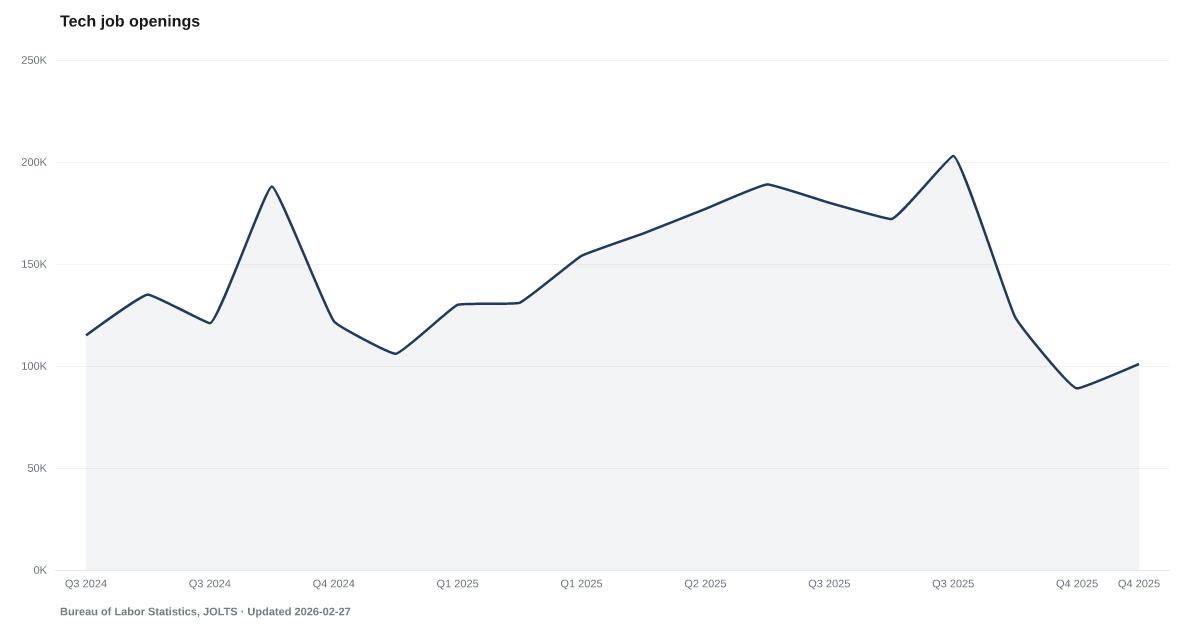
U.S. information-sector job openings were 123,000 in August 2026, little changed from 141,000 a year earlier, according to the U.S. Bureau of Labor Statistics JOLTS survey. The count covers unfilled positions employers were actively recruiting for on the month's last business day, at publishers, telecom carriers, data processing firms, broadcasters and film studios. It is not a count of every tech job opening. Source: BLS JOLTS, NAICS 51, seasonally adjusted.
Employers in the information sector were recruiting for 123,000 open jobs at the end of August 2026, little changed from 141,000 a year earlier.
A month earlier, in July 2026, openings were 78,000, little changed. The latest reading is the highest since August 2025. The latest month's figure is preliminary and will be revised.
An opening counts if, on the last business day of the month, a specific job exists, it could start within 30 days, and the employer is actively recruiting from outside. Openings are a snapshot of unfilled positions on one day, not hires and not online job ads. Jobs to be filled internally, by recall or by contractors are left out.
The information sector is an industry grouping of employers, not a list of occupations. It includes software publishers, telecommunications carriers, data processing and hosting, film, sound recording, broadcasting and libraries, whatever the job. Custom software and computer consulting firms are in professional services instead, and tech jobs at banks or retailers count in those industries. Private job-ad counts for tech occupations, such as CompTIA's or Dice's, measure something else.
The figure is seasonally adjusted, which removes the usual swings of the calendar. Each month's first estimate is preliminary and is revised the next month and again at the yearly benchmark, and revisions for this sector have been large: one month's first estimate was cut by 55,000 a month later. Moves smaller than that are described here as little changed. September and October 2025 were estimated with less data than usual because of the federal government shutdown and are left out of comparisons.
This series is one slice of hiring demand. The JOLTS Quits Rate comes from the same survey, the Indeed Job Postings Index counts online postings instead, and Continued Unemployment Claims tracks people collecting benefits. None of them is shown here to predict the others.
Explore Further
Is this happening to you?
Has your employer slowed hiring in publishing, telecom, software or media?
Information Sector Job Openings (NAICS 51) over time: what has changed?

Counties with the highest labor scores
These are labor scores from our County Distress Index, not county readings of Information Sector Job Openings (NAICS 51).
Explore all 3,144 counties →| Period | Value | YoY Change |
|---|---|---|
| Aug 2026 | 123K | -18K |
| Jul 2026 | 78K | -79K |
| Jun 2026 | 89K | -34K |
| May 2026 | 72K | -37K |
| Apr 2026 | 82K | -52K |
| Mar 2026 | 83K | -32K |
| Feb 2026 | 80K | -45K |
| Jan 2026 | 100K | -1K |
| Dec 2025 | 112K | +7K |
| Nov 2025 | 88K | -31K |
| Oct 2025 | 117K | — |
| Sep 2025 | 119K | — |
Frequently Asked Questions
How many job openings are there in the information sector?
BLS's preliminary estimate for August 2026 is 123,000. That is little changed from a year earlier, when there were 141,000. The count is revised the following month.
Is this a count of all tech job openings?
No. It covers employers classified in the information sector, which includes publishing, telecommunications, data processing, broadcasting and film. Custom software and computer consulting firms are counted in professional services, and tech roles at banks, retailers and other companies count in those industries.
Does this series measure the effect of AI on hiring?
No. JOLTS counts openings by industry and gives no cause for changes in them, from artificial intelligence or anything else.
Where does this data come from?
The Bureau of Labor Statistics' Job Openings and Labor Turnover Survey, which samples about 21,000 employers each month. National industry figures come out about a month after the month they describe; BLS publishes industry detail only for the country as a whole, not by state.


Quick poll
Is this affecting you or your household?
Discussion
Get the numbers when they move.
New data drops, indicator updates, and American Distress Index changes — delivered when it matters. No spam.
or Create an Account for full access
Loading comments…